
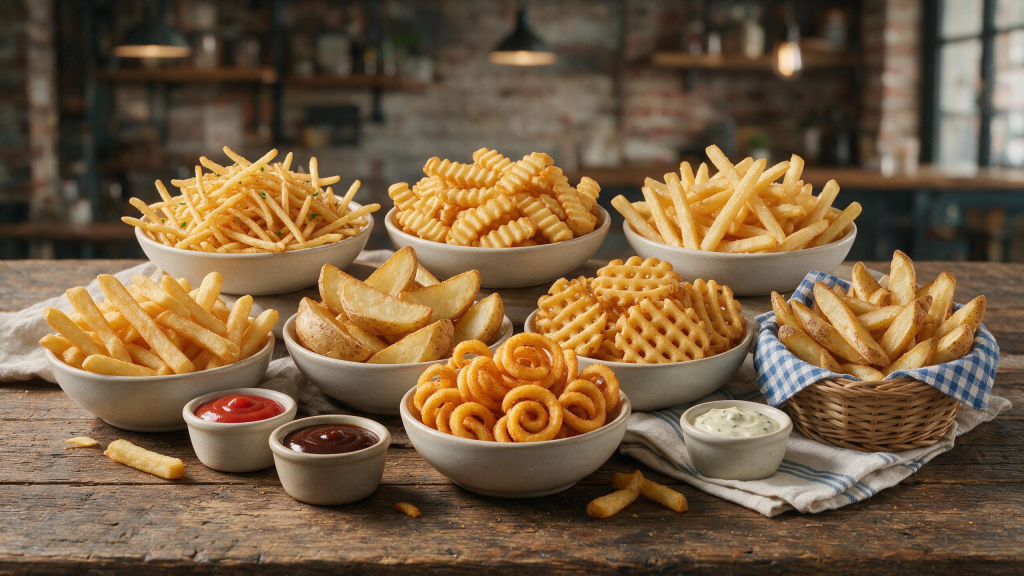
When someone says French fries, you might picture the classic long, golden strips served beside a burger.
But take a closer look at the frozen potato market and you’ll quickly realise — fries come in many more shapes and sizes than you might expect.
Shoestring, straight cut, crinkle cut, thick cut, wedges, waffle fries, curly fries… They may all start with potatoes, but their shape, thickness, texture, cooking performance and ideal applications can be very different.
For restaurants, cafés and foodservice operators, choosing the right fry isn’t only about appearance. The right cut can affect crispiness, holding time, portion perception, sauce pairing and the overall eating experience.
Brands such as McCain, for example, offer a variety of frozen potato solutions with different cuts and specifications to suit different foodservice applications.
So, what’s actually the difference?
1. Shoestring Fries
Thin • Crispy • Quick Cooking
Shoestring fries are among the thinnest fries commonly available. Their high surface-area-to-potato ratio allows them to become beautifully crispy when fried.
Because they are thin, you’ll also get more individual fries in a serving, creating a generous-looking portion without requiring an extremely heavy serving.
Texture: Very crispy exterior with a light, thin centre
Best with: Burgers, sandwiches, fried chicken and casual meals
Great for: Fast food, cafés and quick-service restaurants
They’re a good choice when you want maximum crunch in every bite.
2. Straight Cut Fries
Classic • Versatile • Familiar
This is probably what most people imagine when they hear “French fries.”
Straight cut fries offer a good balance between a crispy exterior and fluffy potato interior. Different thicknesses are available in the market, allowing operators to choose according to their menu concept.
It’s also one of the most versatile formats found across foodservice potato ranges, including McCain fries.
Texture: Crispy outside, soft and fluffy inside
Best with: Burgers, fried chicken, fish & chips, Western dishes and sharing platters
Great for: Almost any F&B operation
If you’re looking for one fry that can work across multiple menu items, straight cut is usually the safest all-rounder.
3. Crinkle Cut Fries
Ridged • Crunchy • Sauce-Friendly
Crinkle cut fries are easily recognised by their signature wavy surface.
Those ridges aren’t just decorative. They increase the surface area of the fry, creating more crispy edges while also helping sauces and seasonings cling to the potato.
Texture: Crispy ridges with a substantial potato centre
Best with: Cheese sauce, mayonnaise, chilli sauce, loaded fries and dipping platters
Great for: Casual dining, cafés and snack concepts
They’re especially useful for dishes where sauce is part of the experience.
4. Steakhouse / Thick Cut Fries
Thick • Fluffy • Potato-Forward
When fries become thicker, the eating experience changes.
Instead of focusing primarily on crunch, thick-cut fries give you much more soft potato in every bite. They tend to feel heavier, heartier and more substantial.
Texture: Lightly crisp exterior with a thick, fluffy centre
Best with: Steak, grilled meat, burgers and Western mains
Great for: Steakhouses, pubs, restaurants and premium casual dining
These fries work particularly well when the potato is expected to feel like a proper side dish rather than simply a snack.
5. Potato Wedges
Chunky • Hearty • Rustic
Wedges are thick sections of potato that often retain some of their skin, giving them a more rustic appearance.
Their larger size creates a completely different ratio of crispy exterior to fluffy interior compared with conventional fries.
They can also carry heavier seasoning very well.
Texture: Crisp outside with a large, soft potato centre
Best with: Sour cream, cheese sauce, BBQ seasoning, spicy seasoning and grilled dishes
Great for: Cafés, Western restaurants, sharing platters and appetisers
For menus that want something more substantial than regular fries, wedges are an easy alternative.
6. Waffle Fries
Distinctive • Crispy • Perfect for Dipping
Waffle fries are cut into a lattice or criss-cross pattern.
Their unusual shape creates plenty of edges and surface area for crisping, while the openings and grooves help capture dips and sauces.
Their larger visual footprint can also make them stand out on a plate.
Texture: Crispy edges with a tender centre
Best with: Dips, cheese sauce, loaded toppings and fried chicken
Great for: Trend-driven cafés, casual dining and sharing menus
Sometimes, changing the shape of a potato is enough to make a familiar side dish feel completely different.
7. Curly Fries
Fun • Seasoned • Full of Character
Curly fries are spiral-cut potatoes often paired with stronger seasoning.
Their irregular shape produces a combination of thinner crispy sections and thicker, softer sections, giving every bite slightly different texture.
Texture: Crispy, textured and varied
Best with: Burgers, fried chicken, snack platters and dipping sauces
Great for: Fast food, cafés, entertainment venues and casual dining
They’re an excellent option when you want fries to have more personality on the plate.
8. Skin-On Fries
Rustic • Natural-Looking • Potato-Rich
Skin-on fries retain part or all of the potato skin.
Rather than being defined by one specific thickness, skin-on fries can come in several cuts. What distinguishes them is their more natural, rustic appearance.
Texture: Depends on the cut, with additional texture from the skin
Best with: Burgers, grilled meats, sandwiches and café dishes
Great for: Cafés, bistros and artisan-style concepts
They can help create a more homemade and rustic visual presentation.
So, Which Type of Fries Should You Choose?
There isn’t one “best” French fry.
The better question is:
What kind of eating experience do you want to create?
If you want maximum crispiness, shoestring fries may be the better choice.
If you need something versatile for many dishes, straight cut fries are hard to beat.
If you’re serving plenty of sauces or loaded toppings, crinkle or waffle fries provide more surface area.
If you want something hearty and potato-forward, thick-cut fries or wedges make more sense.
And if presentation is important, specialty cuts such as curly or waffle fries can immediately give a familiar menu item more character.
More Than Just a Side Dish
French fries might look simple, but choosing the right cut can make a surprisingly big difference.
Thickness affects texture.
Shape affects crispiness.
Surface area affects sauce and seasoning coverage.
And presentation affects how customers perceive the dish.
That’s also why foodservice potato specialists such as McCain provide different fry cuts and formats instead of offering just one universal French fry. Different menus call for different potato solutions.
For F&B operators, the right product should complement the food you’re serving, your preparation method and the experience you want customers to remember.
So the next time you’re choosing fries for your menu, don’t just ask:
“Which fries should I buy?”
Ask:
“Which fries belong on this plate?”
Looking for the Right Fries for Your Menu?
At BGS Trading, we offer McCain frozen potato products alongside a wide range of foodservice solutions for restaurants, cafés, hotels, caterers and other F&B businesses.
Whether you’re looking for a classic fry or exploring a different cut for your menu, our team can help you find a suitable potato solution for your application.
BGS Trading — Your Partner in Food Supply Chain.